From Django to Golang: Relearning Backend Engineering by Building a Fintech System

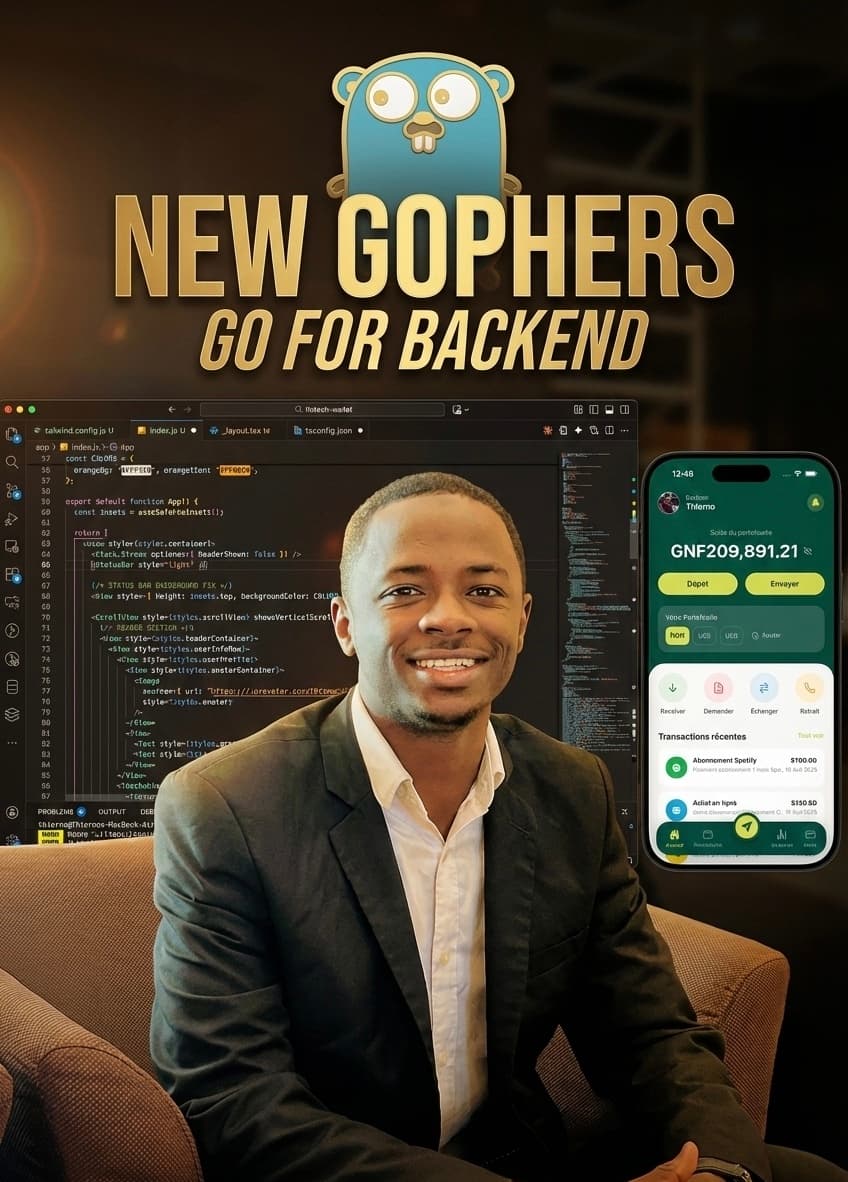
Why I deliberately stepped out of my comfort zone, left Django behind for a while, and started learning Golang by designing a real-world fintech backend from first principles.
After spending years building backend systems with Python and Django, I reached a point where writing APIs felt comfortable—almost too comfortable. While that confidence is valuable, I realized something was missing: a deeper, lower-level understanding of how backend systems are designed, structured, and protected at scale.
That realization led me to Golang.
Unlike Django, which provides many abstractions out of the box, Go forces you to be explicit. Error handling is deliberate. Concurrency is not hidden. Project structure is a design choice, not a default. At first, this felt unfamiliar—but quickly, it became reassuring.
Instead of jumping straight into frameworks, I decided to learn Go the same way real systems are built: by designing a fintech backend from scratch. Not a toy app, but a system that respects real-world constraints—money movement, consistency, auditability, and failure handling.
The first major shift was architectural. Rather than relying on a single "balance" field, I learned why real financial systems use ledgers as the source of truth. Money is never updated—it is recorded. Balances are derived, transactions are atomic, and history is immutable. These ideas aren't Go-specific, but Go's simplicity makes them easier to model cleanly and correctly.
Another key lesson was intentionality. In Go, nothing happens "by magic." If something fails, you must handle it. If data moves, you must define how. This forced me to slow down, think like a systems engineer, and design before coding—a habit I plan to carry into every future project.
This transition is not about abandoning Python or Django. It's about expanding how I think as an engineer. Go is helping me sharpen fundamentals: domain modeling, clear boundaries, predictable behavior, and respect for correctness—especially in systems that handle money.
I'm documenting this journey not as a Golang expert, but as an engineer deliberately choosing discomfort to grow. The goal is simple: become someone who can design, reason about, and build reliable backend systems—regardless of language or framework.